The Complete Guide to Bubble Soccer
Everything you need to know about bubble soccer — from first bounce to running your own business.
Bubble soccer — also known as bubble football, bumper ball or zorb football — has exploded from a novelty YouTube clip into a globally recognised sport and entertainment format. Whether you are a first-time player curious about the rules, an event organiser searching for the perfect party activity, or an entrepreneur ready to launch a rental business, this guide covers every angle. At Bubble Allstars we have been sourcing and distributing premium bubble soccer equipment for years, giving us a front-row seat to the industry's evolution. Below you will find our ten in-depth articles, each written to answer the questions we hear most from customers around the world.
Bubble soccer, bubble football, bumper ball: one sport, many names
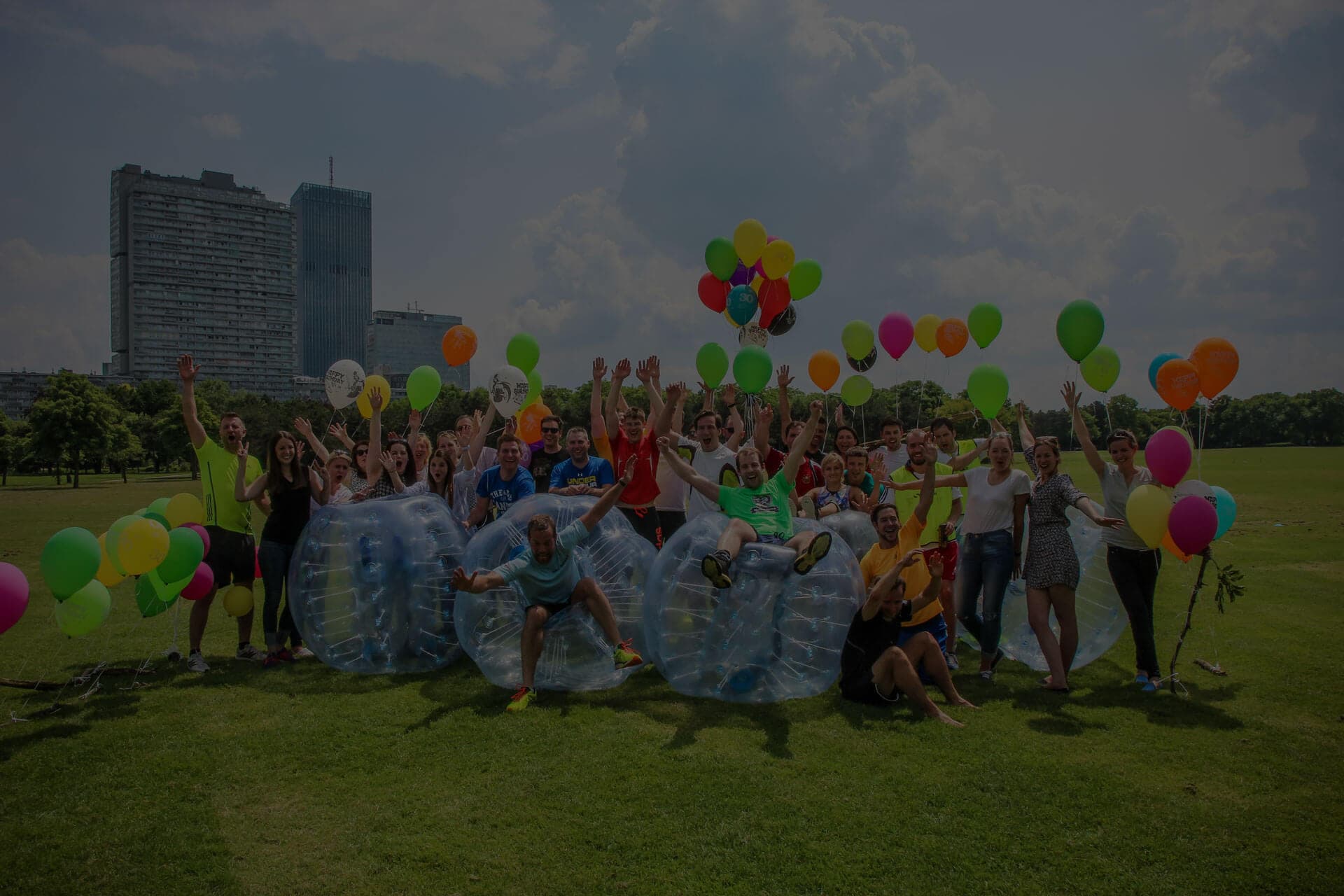
Bubble soccer is football played inside inflatable bubbles: each player wears a large air-filled ball over the upper body and head, the legs stay free to run and kick, and bumping into opponents is part of the game. The same sport is known as bubble football (the usual name in the UK and Ireland), bumper ball, body zorb or zorb football, and is also called Loopyball. Whatever the name, the equipment is the same: a 1.5 m ball for adults or a 1.2 m ball for children, made of PVC or TPU.
A short history
The game began in Norway in 2011, when comedians Henrik Elvestad and Johan Golden played football in zorb-like suits on a TV comedy show. The clips spread fast, early players made up the rules as they went, and within a few years leagues and event companies across Europe were playing to broadly the same rules: small teams, short halves and no charging from behind. Today it is a staple of team events, school sports days, birthday parties and rental businesses. Bubble Allstars, based in Vienna, has supplied the equipment as a certified distributor since 2008.
What Is Bubble Soccer?
Bubble soccer is a team sport in which each player wears a large inflatable bubble (usually covering the torso, head and upper arms) and attempts to score goals while bumping, rolling and bouncing off opponents. The game originated in Norway in 2011 after a comedy TV segment went viral and has since spread to over 80 countries. Matches are typically played five-a-side on a small pitch, though formats range from casual backyard games to organised league tournaments.
Why Is It So Popular?
Three things drive bubble soccer's popularity: it is hilariously fun, nearly anyone can play regardless of athletic ability, and it photographs and films brilliantly — making it a natural fit for social media. Corporate event planners, birthday party hosts and stag-do organisers all love the fact that bubble soccer delivers guaranteed laughter within minutes. The barrier to entry is low: you need a flat surface, a ball and a set of bubbles.
Choosing the Right Equipment
The quality of your experience depends heavily on the quality of the bubbles. Cheap knock-offs from unverified suppliers often use thin PVC, weak seams and flimsy harnesses that deflate mid-game. Bubble Allstars supplies certified, heavy-duty bubbles in both PVC and TPU, with reinforced stitching and ergonomic internal harnesses. For a detailed breakdown of materials, check out our PVC vs TPU comparison article below.
Playing Formats and Variations
Classic bubble soccer follows simplified football rules, but the community has invented dozens of variations: Last Man Standing (free-for-all bumping), Bubble Sumo (one-on-one ring battles), Bubble Relay Races, Bubble Bowling and even Bubble Royale formats. Our Rules & How to Play guide explores these in depth.
Safety First
Bubble soccer looks chaotic but is statistically far safer than conventional contact sports when proper guidelines are followed. The inflatable shell absorbs impacts and prevents direct body-to-body contact. Still, surface selection, player screening and referee oversight matter. Read our Safety Tips & Maintenance article for a comprehensive checklist.
Bubble Soccer as a Business
Thousands of entrepreneurs worldwide have turned bubble soccer into a profitable rental or event business. Start-up costs are relatively low, margins are healthy, and repeat bookings are common. Our Start a Bubble Soccer Business guide walks you through everything from initial investment and pricing strategy to marketing and insurance.
Bubble Soccer for All Ages
With junior-sized bubbles (1.2 m, for children of roughly 7–12 who are about 1.20–1.60 m tall) and lightweight TPU options, bubble soccer is now accessible to virtually every age group. Schools, youth clubs and family entertainment centres are among the fastest-growing customer segments for Bubble Allstars. Our Kids guide explains how to adapt the game for younger players safely.
Getting Started Today
Whether you want to buy a single pair of bubbles for backyard fun or outfit a full commercial fleet, Bubble Allstars offers flexible packages, delivery across Europe (typically 14–20 business days) and expert consultation. Browse the articles below to deepen your knowledge, then request a personalised quote — we respond within 24 hours.
Explore All Topics
Ready to Get Started?
Tell us what you need and get a personalised quote for premium bubble soccer equipment within 24 hours.
Request a Quote